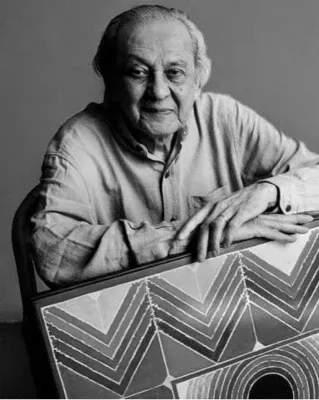
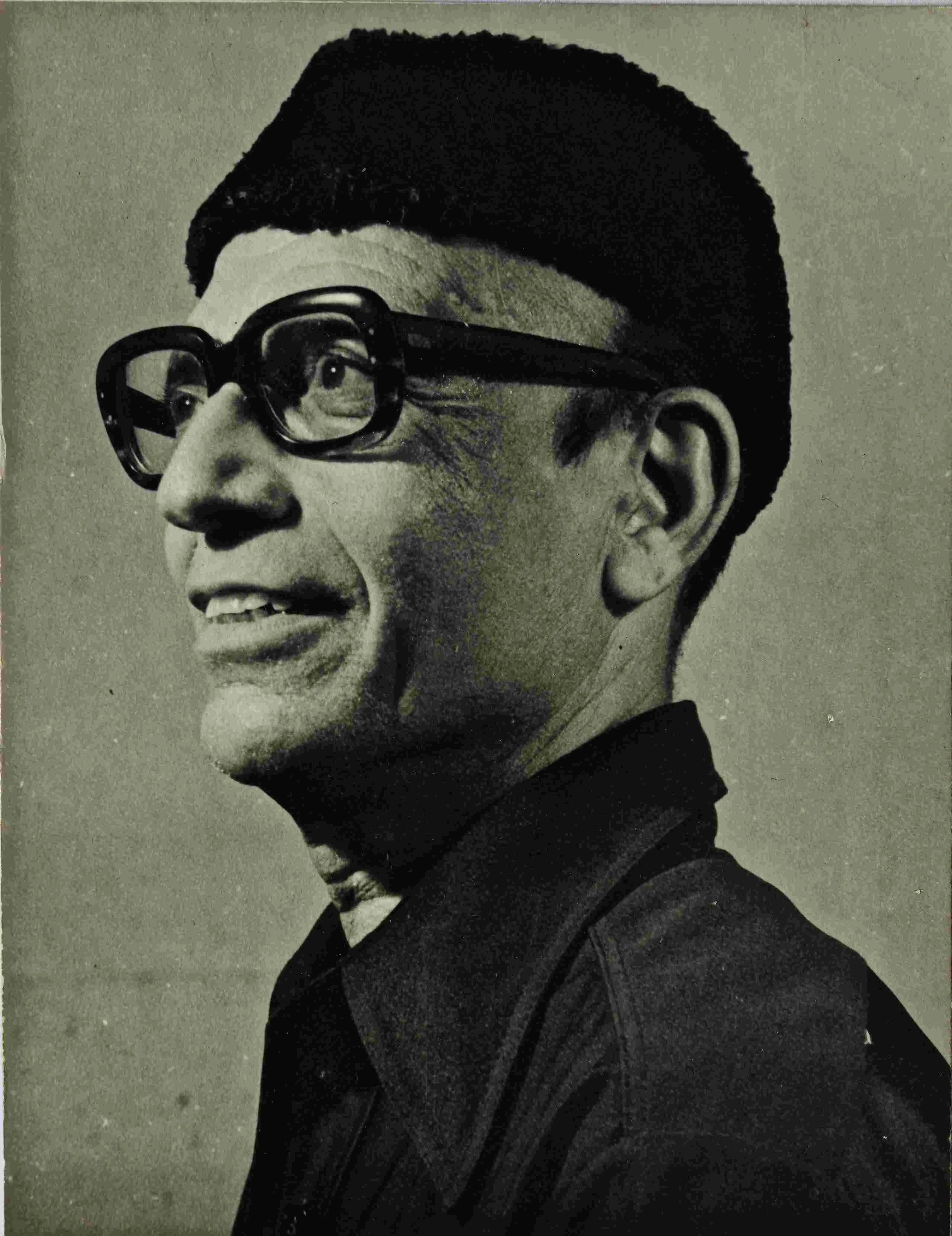
KK Hebbar, born in 1911 in Karnataka, grew up in an environment shaped by folk traditions like Yakshagana. Even after the study at J.J. School of Art, Mumbai, his work consistently remained rooted in Indian folk sensibilities.
Hebbar drew
KK Hebbar, born in 1911 in Karnataka, grew up in an environment shaped by folk traditions like Yakshagana. Even after the study at J.J. School of Art, Mumbai, his work consistently remained rooted in Indian folk sensibilities.
Hebbar drew inspiration from artists such as Paul Gauguin and Amrita Sher-Gil. Indian miniatures too influenced his artistic practice. The works he produced during decade-long period beginning around 1946 are regarded as highly influential in shaping modern Indian art and hold a significant place in its history.
Hebbar developed a distinctive visual language that blended impressionistic and expressionistic elements. Deeply concerned with social realities, he addressed themes like poverty, hunger, and the devastation of nuclear warfare. At the same time, he created works that captured the elegance and rhythm of dance, influenced by his study of the classical Indian form Kathak. He is also known for his rhythmic line drawings and illustrations.
Hebbar had participated in major international events such as the Venice Biennale (1955) and the São Paulo Biennale (1959). He received several prestigious honors, including the Padma Bhushan in 1989 and the Maharashtra Government’s Gourav Puraskar in 1990.
K.K. Hebbar passed away in 1996 at the age of 85.
Academics
Academy Julian (Painting) and Ecole Estinne (Graphics), Paris (1949-50)
Diploma in Painting, Sir J, J. School of Art, Mumbai (1934-38)
Awards
Maharashtra Shasan ‘Gourav Puraskar’ in 1990
‘Padma Bhushan’, by the President of India in 1989
Maharashtra State’s Gaurav Puraskar in 1988
Karnataka State Rayotsava Award in 1986
Karnataka Lalit Kala Akademy Award for Distinguished Artists in 1985
The President of India nominated him the Chairman of Lalit Kala Akademi, New Delhi in 1980-84
Soviet Land Nehru Award in 1983
Honorary D. Litt. from Mysore University in 1976
Fellowship, Lalit Kala Akademi, New Delhi in 1976
Padmasri, by the President of India in 1961
National Academy of Art Award for his work ‘Mahim Darga’, Lalit Kala Akademi, New Delhi in 1958
National Academy of Art Award for his work ‘ Song of the Field’, Lalit Kala Akademi, New Delhi in 1957
National Academy of Art Award for his work ‘Rhythm’, Lalit Kala Akademi, New Delhi in 1956
First Bombay State Art Award, Mumbai in 1956
Nominated as Eminent artist by the Lalit Kala Akademi in its first General Council meet in 1954
Gold Medal of the Bombay Art Society, Mumbai in 1947
Gold Medal of the Academy of Fine Arts, Kolkata in 1941
KK Hebbar, born in 1911 in Karnataka, grew up in an environment shaped by folk traditions like Yakshagana. Even after the study at J.J. School of Art, Mumbai, his work consistently remained rooted in Indian folk sensibilities.
Hebbar drew inspiration from artists such as Paul Gauguin and
KK Hebbar, born in 1911 in Karnataka, grew up in an environment shaped by folk traditions like Yakshagana. Even after the study at J.J. School of Art, Mumbai, his work consistently remained rooted in Indian folk sensibilities.
Hebbar drew inspiration from artists such as Paul Gauguin and Amrita Sher-Gil. Indian miniatures too influenced his artistic practice. The works he produced during decade-long period beginning around 1946 are regarded as highly influential in shaping modern Indian art and hold a significant place in its history.
Hebbar developed a distinctive visual language that blended impressionistic and expressionistic elements. Deeply concerned with social realities, he addressed themes like poverty, hunger, and the devastation of nuclear warfare. At the same time, he created works that captured the elegance and rhythm of dance, influenced by his study of the classical Indian form Kathak. He is also known for his rhythmic line drawings and illustrations.
Hebbar had participated in major international events such as the Venice Biennale (1955) and the São Paulo Biennale (1959). He received several prestigious honors, including the Padma Bhushan in 1989 and the Maharashtra Government’s Gourav Puraskar in 1990.
K.K. Hebbar passed away in 1996 at the age of 85.
Academics
Academy Julian (Painting) and Ecole Estinne (Graphics), Paris (1949-50)
Diploma in Painting, Sir J, J. School of Art, Mumbai (1934-38)
Awards
Maharashtra Shasan ‘Gourav Puraskar’ in 1990
‘Padma Bhushan’, by the President of India in 1989
Maharashtra State’s Gaurav Puraskar in 1988
Karnataka State Rayotsava Award in 1986
Karnataka Lalit Kala Akademy Award for Distinguished Artists in 1985
The President of India nominated him the Chairman of Lalit Kala Akademi, New Delhi in 1980-84
Soviet Land Nehru Award in 1983
Honorary D. Litt. from Mysore University in 1976
Fellowship, Lalit Kala Akademi, New Delhi in 1976
Padmasri, by the President of India in 1961
National Academy of Art Award for his work ‘Mahim Darga’, Lalit Kala Akademi, New Delhi in 1958
National Academy of Art Award for his work ‘ Song of the Field’, Lalit Kala Akademi, New Delhi in 1957
National Academy of Art Award for his work ‘Rhythm’, Lalit Kala Akademi, New Delhi in 1956
First Bombay State Art Award, Mumbai in 1956
Nominated as Eminent artist by the Lalit Kala Akademi in its first General Council meet in 1954
Gold Medal of the Bombay Art Society, Mumbai in 1947
Gold Medal of the Academy of Fine Arts, Kolkata in 1941
Exhibitions
‘K. K. Hebbar – Exhibition of Paintings’, Vadehra Art Gallery, New Delhi in 1993
‘Indian Drawing Today’, Jehangir Art Gallery,, Mumbai in 1987
‘K. K. Hebbar – Retrospective’, Jehangir Art Gallery,, Mumbai in 1980
‘Hebbar – Drawings and Paintings’, Jehangir Art Gallery,, Mumbai in 1978
‘Drawings and Paintings’, All India Fine Arts and Crafts Society (AIFACS), New Delhi in 1973
‘Retrospective’, Rabindra Bhavan, Lalit Kala Akademi, New Delhi in 1971
Bonythan Art Gallery, Australia in 1969
New York. USA in 1964
All India Exhibition of Paintings and Sculptures, traveling to USSR, Poland and West: