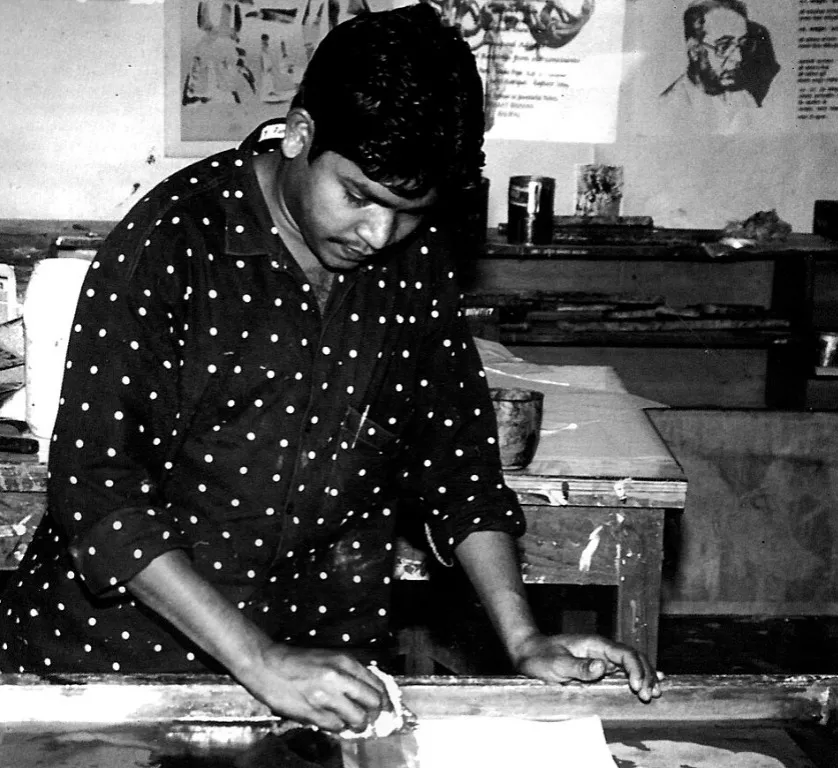
Born in 1962, Jangarh Singh shyam is a visionary Gond Adivasi artist from Madhya Pradesh who redefined Indian tribal art by transforming traditional Gond paintings into a contemporary form that is now celebrated globally. Like other members of his
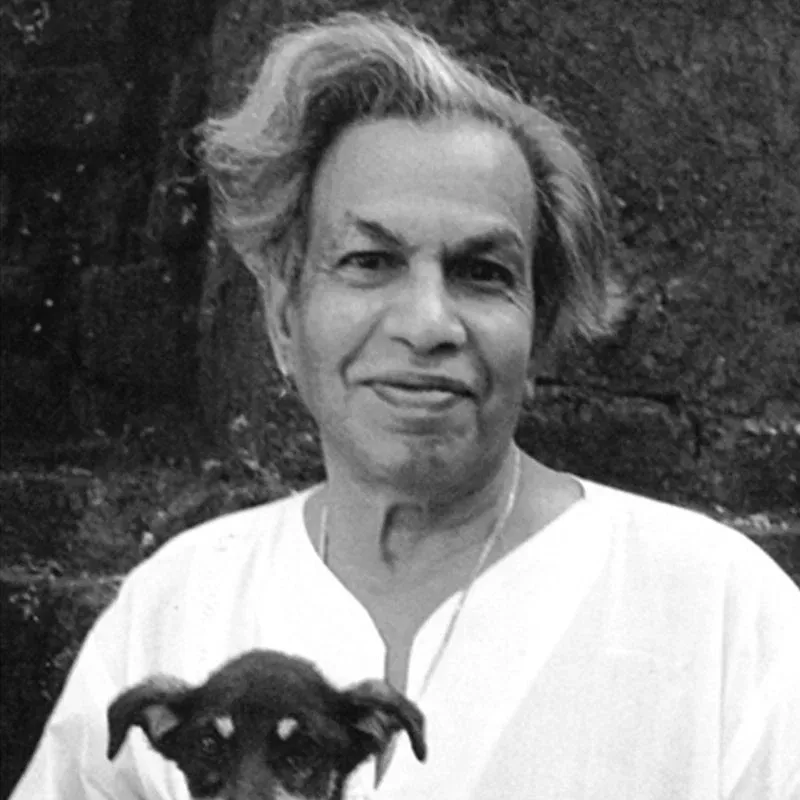
Born in 1962, Jangarh Singh shyam is a visionary Gond Adivasi artist from Madhya Pradesh who redefined Indian tribal art by transforming traditional Gond paintings into a contemporary form that is now celebrated globally. Like other members of his community, he grew up in the forests of Mandla, deeply influenced by the natural surroundings and the artistic traditions of the community, which encompassed music & ritualistic art.
His breakthrough came in the early 1980s when renowned artist Jagdish Swaminathan, then the director of Bharat Bhavan in Bhopal, discovered his extraordinary talent. Struck by a mural Jangarh had created using local yellow clay, Jagdish Swaminathan invited him to work at Bharat Bhavan, marking a turning point in his artistic journey. At Bharat Bhavan, Jangarh refined his craft, transitioning from traditional wall paintings to sophisticated canvas works and ultimately pioneering the distinctive "Jangarh Kalam" style which revolutionized Gond art and brought it into the realm of contemporary Indian art.
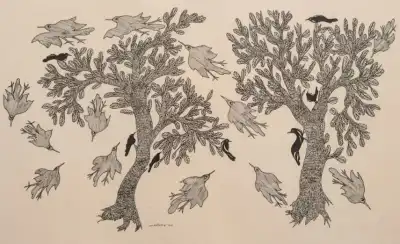
Jangarh's works reflect the innocent vision of the tribal mind, executed with the confidence of a creative genius. His was a world of gods and goddesses, of birds, animals and trees, which he painted stroke by stroke, creating a strange repetitive textural pattern. Jangarh’s paintings were defined by his intricate mark-making techniques which infused his compositions with a sense of movement and dynamism. He masterfully employed repeated, yet varying, dots and lines, creating rhythmic patterns that brought his forms to life. His signature style included dense cross-hatching, tightly drawn comb-like strokes, rows of tiny ovals and bands of dots, often interwoven with narrow squiggles and small, irregular amoeba-like shapes.
Jangarh was invited to Paris for a show at the famous Pompidou Centre. He also travelled to the US, UK and many other countries to exhibit his works. He painted the interiors of the Madhya Pradesh Vidhan Sabha and distributed the fee of Rs.7 lakhs that he received to his fellow artists and the people of his village, despite the fact that he lived in a modest accommodation in Bhopal.
Despite his success, Jangarh reportedly faced difficult working conditions and personal struggles, including depression. In 2001, while in Japan for a residency, he took his own life, at the age of 40.
Born in 1962, Jangarh Singh shyam is a visionary Gond Adivasi artist from Madhya Pradesh who redefined Indian tribal art by transforming traditional Gond paintings into a contemporary form that is now celebrated globally. Like other members of his community, he grew up in the forests of Mandla,
Born in 1962, Jangarh Singh shyam is a visionary Gond Adivasi artist from Madhya Pradesh who redefined Indian tribal art by transforming traditional Gond paintings into a contemporary form that is now celebrated globally. Like other members of his community, he grew up in the forests of Mandla, deeply influenced by the natural surroundings and the artistic traditions of the community, which encompassed music & ritualistic art.
His breakthrough came in the early 1980s when renowned artist Jagdish Swaminathan, then the director of Bharat Bhavan in Bhopal, discovered his extraordinary talent. Struck by a mural Jangarh had created using local yellow clay, Jagdish Swaminathan invited him to work at Bharat Bhavan, marking a turning point in his artistic journey. At Bharat Bhavan, Jangarh refined his craft, transitioning from traditional wall paintings to sophisticated canvas works and ultimately pioneering the distinctive "Jangarh Kalam" style which revolutionized Gond art and brought it into the realm of contemporary Indian art.
Jangarh's works reflect the innocent vision of the tribal mind, executed with the confidence of a creative genius. His was a world of gods and goddesses, of birds, animals and trees, which he painted stroke by stroke, creating a strange repetitive textural pattern. Jangarh’s paintings were defined by his intricate mark-making techniques which infused his compositions with a sense of movement and dynamism. He masterfully employed repeated, yet varying, dots and lines, creating rhythmic patterns that brought his forms to life. His signature style included dense cross-hatching, tightly drawn comb-like strokes, rows of tiny ovals and bands of dots, often interwoven with narrow squiggles and small, irregular amoeba-like shapes.
Jangarh was invited to Paris for a show at the famous Pompidou Centre. He also travelled to the US, UK and many other countries to exhibit his works. He painted the interiors of the Madhya Pradesh Vidhan Sabha and distributed the fee of Rs.7 lakhs that he received to his fellow artists and the people of his village, despite the fact that he lived in a modest accommodation in Bhopal.
Despite his success, Jangarh reportedly faced difficult working conditions and personal struggles, including depression. In 2001, while in Japan for a residency, he took his own life, at the age of 40.